



The digital economy is booming, and the opportunities for earning extra income have never been more abundant in 2025. The digital product economy is generating over $2.5 trillion in value annually as of 2025, with internet users spending $560 billion on digital media like videos, ebooks, music, and games in 2024 alone.
This explosive growth presents an unprecedented opportunity for creators, entrepreneurs, and anyone looking to monetize their skills and knowledge.
You might be a talented writer, graphic designer, photographer, or educator, there's a global market ready to pay for your expertise. The rise of platforms like Mainstack has democratized the process, empowering creators to build sustainable income streams by transforming their knowledge into profitable digital products.
This comprehensive guide will provide you with practical strategies and actionable steps to launch your digital product business and achieve financial freedom in 2025.
Digital products are intangible assets that exist in digital format, including e-books, online courses, templates, software, and digital art. They offer unmatched advantages: instant global distribution, zero shipping costs, and the ability to sell the same product infinitely without additional production expenses.
With 68% of people aged 16+ paying for digital content each month, the demand continues growing rapidly. Modern consumers prioritize convenience, accessibility, and value-driven solutions that can enhance their personal or professional lives.
The appeal of digital products lies in their ability to solve specific problems, provide education, or offer entertainment in a cost-effective, immediately accessible format. As technology adoption accelerates globally, this market shows no signs of slowing down.
The numbers speak for themselves. The global online courses market alone was valued at USD 251.46 billion in 2024 and is expected to reach USD 1080.32 billion by 2032, growing at a CAGR of 17.58%.
The global e-learning market hit $316.2 billion in 2023, driven by increased smartphone use, preference for flexible education, and gamification techniques. Even more specific segments are thriving: online games and virtual goods captured 38% of digital goods market share in 2024, forecast to expand at a 29.8% CAGR through 2030.
This massive market expansion creates opportunities across every niche imaginable, from professional development and creative skills to hobbies and entertainment.
Success in the digital products space starts with understanding what people actually want to buy. 61% of marketers say that generating traffic and leads is their number one challenge, making market validation crucial before investing time in product creation.
Research Techniques That Work:
Social Media Intelligence: Use platforms like TikTok, Facebook, Instagram, and Reddit to identify trending topics and pain points. Search for keywords like "I need," "I want," "how to," and "help me" to uncover market gaps.
Answer the Public: This free tool by Neil Patel reveals what questions people are asking about your topic, providing direct insight into market demand.
Competitor Analysis: Study successful creators in your niche. What products are they selling? What problems are they solving? How are they pricing their offerings?
Community Research: Join Facebook groups, Discord servers, and online forums related to your expertise. Pay attention to frequently asked questions and common struggles.
For example, a video editor researching the market might discover high demand for tutorials on specific software features, transitions, or effect techniques based on TikTok search volumes and Reddit discussions.
Before investing significant time in product development, validate your idea through:
This research phase prevents the costly mistake of creating products nobody wants to buy.

Your product format should align with both your skills and your audience's preferences. Here are the most profitable formats in 2025:
Educational Content:
Creative Products:
Service-Based Digital Products:
The key is choosing a format that showcases your expertise while meeting your audience's learning preferences. If you excel at written communication, start with ebooks. If you're comfortable on camera, consider video courses.
Content marketing and SEO provides the best ROI according to marketers, making quality content creation essential for success. Your content must be engaging, valuable, and distinctly better than free alternatives available online.
Essential Content Creation Principles:
Problem-Solution Focus: Every piece of content should address a specific problem your audience faces. Structure your content around transformation—where they are now versus where they want to be.
Storytelling Integration: Use personal experiences, case studies, and customer success stories to make your content memorable and relatable.
Multi-Modal Learning: Combine text, visuals, audio, and interactive elements to accommodate different learning styles and increase engagement.
Progressive Skill Building: Structure lessons in logical progression, ensuring each module builds upon previous knowledge.
Modern content creation benefits significantly from AI assistance. Tools like ChatGPT can help with:
However, AI should enhance rather than replace your unique expertise and personal insights.
Your content quality directly impacts perceived value and customer satisfaction. Invest in:
Use free tools like Canva for professional-looking graphics, templates, and visual elements without expensive design software.
Choosing the right selling platform significantly impacts your success. While many options exist, Mainstack stands out for several key reasons:
Zero Upfront Costs: Unlike subscription-based platforms, Mainstack operates on a simple 3% transaction fee model—you only pay when you earn.
Global Reach: Accept payments in 135+ currencies including crypto with seamless global payouts, removing geographical barriers to your business growth.
All-in-One Solution: Integrated storefront, payment processing, course hosting, booking systems, and analytics eliminate the need for multiple tools.
AI-Powered Features: Built-in AI content generation helps create product descriptions, course outlines, and marketing copy.
Mobile Optimization: Smartphones and tablets represented 63% of digital goods market revenue in 2024, making mobile-first design crucial.

Your digital storefront serves as your 24/7 salesperson. Optimize it with:
Clear Value Propositions: Immediately communicate what customers will gain from your products.
Social Proof: Display testimonials, student counts, and success stories prominently.
Professional Imagery: Use high-quality product mockups and preview images.
Compelling Product Descriptions: Focus on benefits and transformation rather than just features.
Streamlined Checkout: Integrated biometric authentication and one-click wallets reduce checkout friction, pushing average conversion rates above desktop benchmarks.
Modern digital businesses must think globally from day one. Ensure your payment setup accommodates international customers through:
72% of overall marketing budgets get put towards digital marketing channels, highlighting the importance of strong online presence. Successful digital product businesses require consistent brand building across multiple channels.
Content Marketing Strategy:
Educational Content: Share valuable insights related to your expertise through blog posts, videos, and social media content. This positions you as an authority while building trust with potential customers.
Platform-Specific Optimization:
Email Marketing: Email marketing returns $36 to $40 for every $1 spent, making it one of the highest-ROI marketing channels. Build an email list by offering valuable free content as lead magnets.
Effective Collaboration Strategies:
53% of all website traffic comes from organic searches, and businesses that blog get 55% more traffic to their websites. SEO provides long-term, cost-effective customer acquisition.
SEO Strategies for Digital Products:
Data-driven decision making separates successful digital product businesses from those that struggle. Track key metrics including:
Revenue Metrics:
Marketing Metrics:
Small improvements in conversion rates compound into significant revenue increases. Focus on:
A/B Testing: Continuously test different versions of:
User Experience Improvements:
Value-Based Pricing: Price based on the transformation you provide rather than the time invested in creation.
Psychological Pricing Techniques:
Tiered Pricing: Offer multiple options (Good/Better/Best) to accommodate different budgets and increase average order value.
As your digital product business grows, automation becomes essential for scaling without proportionally increasing workload.
Customer Service Automation:
Marketing Automation:
Once you establish one successful digital product, expand strategically:
Complementary Products: Create products that naturally extend your customers' journey.
Different Price Points: Offer both premium and entry-level options to capture broader market segments.
Format Variations: Convert successful content into different formats (course to ebook, ebook to audiobook).
Advanced Programs: Create higher-value offerings for customers ready for deeper engagement.
The digital product market in 2025 and beyond offers unprecedented opportunities for creators willing to provide genuine value to their audiences. Success requires combining market research, quality content creation, strategic marketing, and continuous optimization.
Remember that building a sustainable digital product business is a marathon, not a sprint. Focus on serving your customers exceptionally well, and the financial rewards will follow naturally.
Start with one product, master the fundamentals, and scale systematically. Your journey to digital product success begins with the first step, and that step is available to you today.
The question isn't whether digital products can generate significant income in the future, the data clearly shows they can. The question is whether you'll take action to claim your share of this growing market. Your expertise has value, and the world is waiting to pay for it.
.png)

Picture this: you're deep in a YouTube rabbit hole watching someone talk about a niche you didn't even know existed, and halfway through you notice the comments are full of people asking where to buy their course.
And then it hits you: that person is getting paid for this. Not just a little. Sometimes life-changingly well. This, among other things, represents the opportunity being a digital creator presents. But, who exactly is a digital creator, and more importantly, could you be one?
Let’s find out.
A digital creator is someone who produces and distributes value-driven content or products in digital form (and builds a business around it). That could mean writing, stock photos/video, design assets, code, photography presets, or any asset that translates into something people want to consume, use, or learn from online.
A creator owns their asset while influencers often sell access to their audience.
An influencer's value is tied to their audience size and the attention they command. A brand pays them to post, the post goes up, the deal ends, and the influencer's income resets. There's nothing inherently wrong with that model, but it's fundamentally a transaction. The moment the follower count dips or a platform algorithm shifts, their leverage shifts with it.
A creator's value lives in what they've built — the ebook that keeps selling months after it was created, the course someone discovers a year after it launched, the newsletter list that nobody can take away from them. One model is built on visibility, the other is built on value.
It’s important to note that these two categories aren't mutually exclusive. A digital creator can have a huge following and work as an influencer for brands, in the same way that an influencer can build a digital product and start generating passive income.
This is why you don't need a massive following to be a successful digital creator. All you need is something worth buying and an audience that trusts you, even if that audience starts small.
"Digital creator" is a wide umbrella. Here's how to think about the main categories and where you might naturally fit.
These are the bloggers, YouTubers, podcasters, and newsletter writers whose primary output is content and whose audience grows around it. Think of a finance blogger who monetizes through sponsorships and a paid newsletter — or a tech podcaster earning through ads and an exclusive listener community. The content is the product, and everything else grows around that. The best example of this is probably Wisdom Kaye. He never sold digital products; all he did was show up on TikTok in incredibly styled outfits for long enough that the sponsorships and brand deals became inevitable.
These creators build and sell digital products — ebooks, templates, Lightroom presets, music beats, fonts, spreadsheets, UI kits. They create products once and sell them repeatedly, making this a business with low overhead, which is infinitely scalable, and completely owned by the person who made it.
These are the coaches, course creators, consultants, and community builders. They monetize expertise directly through online courses, paid workshops, one-on-one coaching, or membership communities. They are knowledge-based creators turning what they know into something people pay for. Alex Hormozi, for example, has built an empire around teaching people what it takes to establish a successful business.
One of the biggest advantages of being a digital creator is that your income doesn't have to come from a single source. Unlike a traditional job where your earnings are tied to one employer, creators can stack multiple revenue streams on top of each other, each one building on the last.
Here are the main ways digital creators make money.
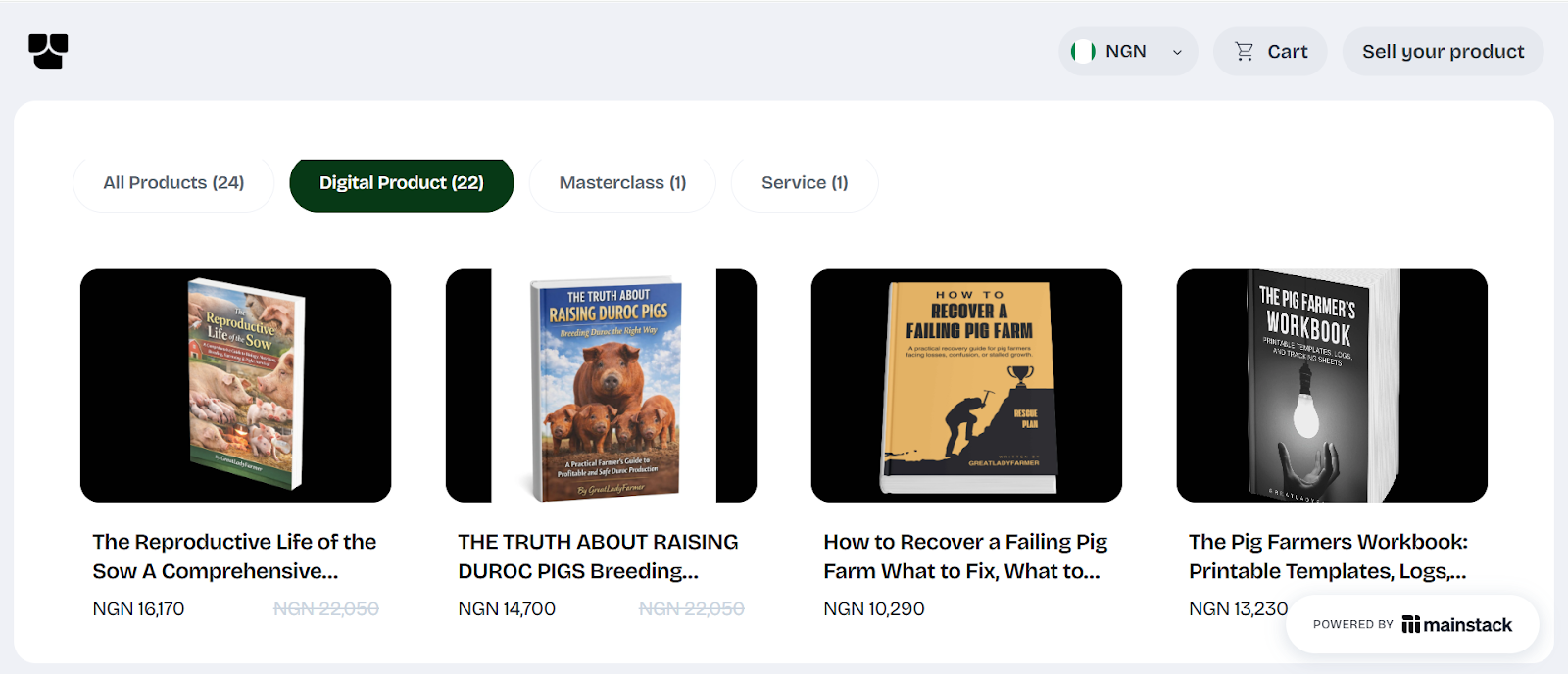
Ebooks, templates, presets, courses, music, digital art, software tools — products you create once and sell repeatedly. This is arguably the most scalable income stream available to creators because there's no inventory, no shipping, and no ceiling on how many units you can sell. A well-positioned digital product can generate income while you sleep, travel, or work on your next project, and with a platform like Mainstack, your digital product storefront can be live and selling in a matter of hours."
Brands pay creators to showcase their products to engaged, niche audiences — and the market for this is bigger than most people realize. You don't need millions of followers to access it either. Micro-creators with audiences between 10,000 and 100,000 followers are increasingly attractive to brands because of their higher engagement rates and specific audience demographics. If your audience trusts you, brands will pay to reach them.
This product model enables you build reliable monthly income by offering exclusive content, community access, or premium resources to paying members. Even a few hundred paying members at a modest monthly price can create life-changing income stability.
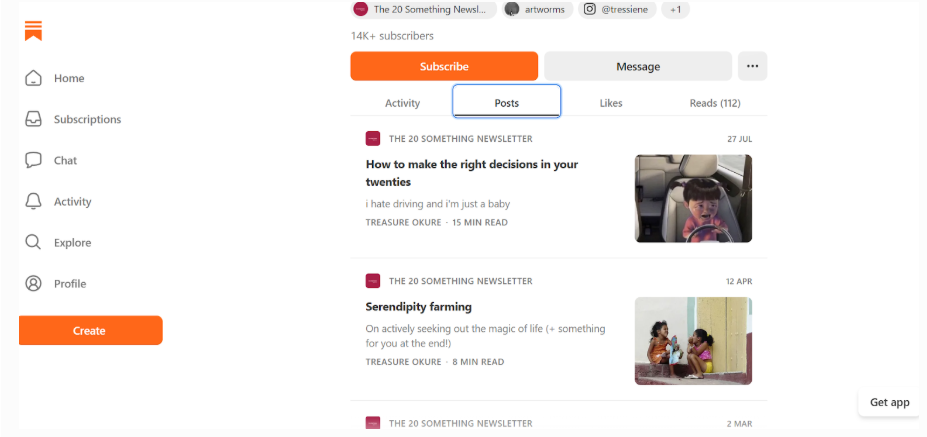
An email list is one of the most powerful monetization channels available to creators, and also one of the most underrated. Unlike social media, your email list is yours. No algorithm can throttle your reach, and no platform can suspend your access to your audience. A paid newsletter with even 500 dedicated subscribers at a modest monthly price can generate meaningful recurring revenue, which only compounds as your list grows.
Affiliate marketing is one of the quieter income streams in a creator's toolkit, but it's consistent. All you need to do is, sign up on affiliate platforms like Mainstack’s, browse the affiliate marketplace, recommend products you know your audience will find useful, and earn a commission every time someone makes a purchase through your link.
It's not a primary income stream for most creators, but a layer on top of everything else.
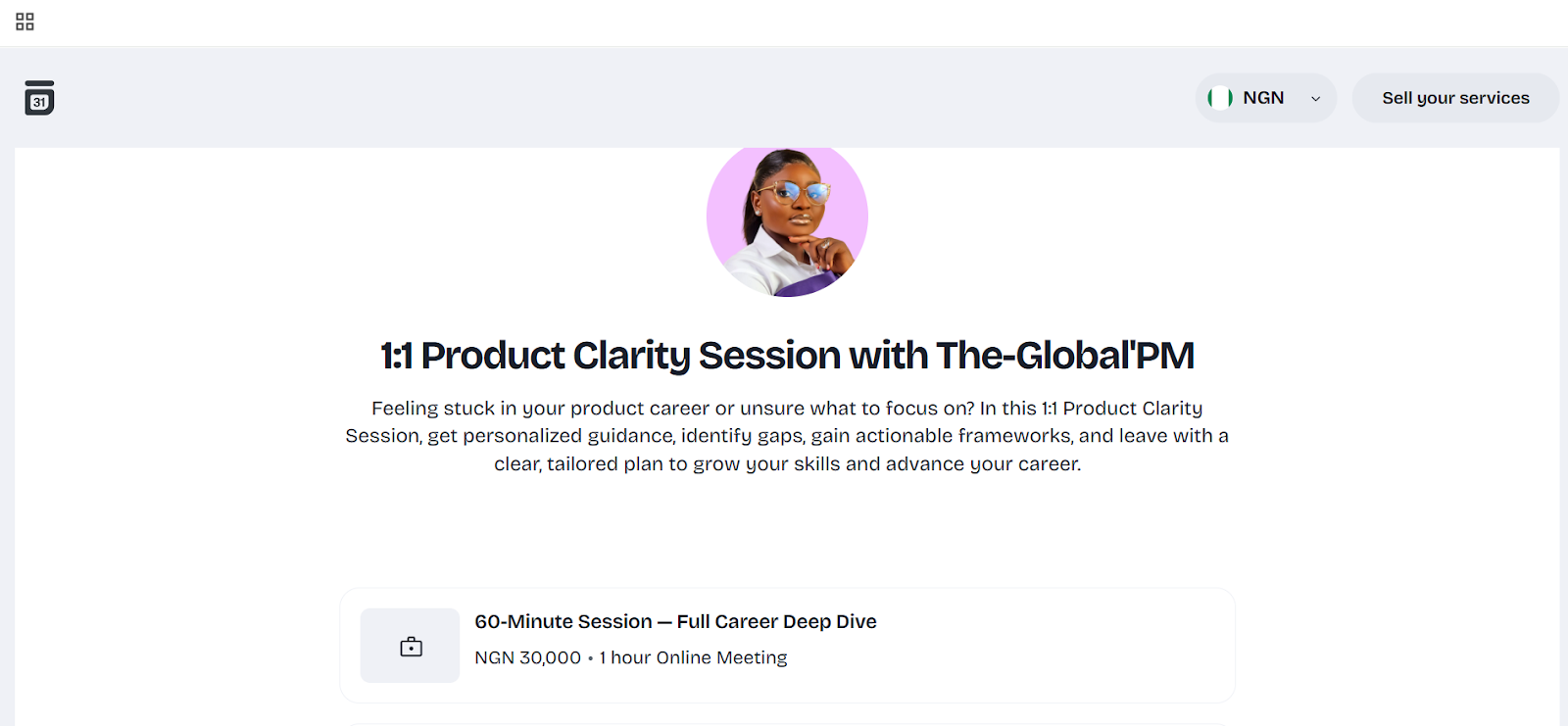
There's a growing market for expertise that doesn't fit into traditional education. People are willing to pay for direct access to knowledge. So, if you've developed genuine expertise in your niche, there are people out there willing to pay for direct access to it, and you can utilize Mainstack's hosted courses and bookings features to set up your first paid session or host a course without having to stitch five different tools together.
Pick a niche: Find the overlap between what you know, what you enjoy, and what people are actively searching for help with.
Choose a primary platform: Focus on one to two platforms to avoid spreading yourself too thin.
Define your content format: This is how you'll deliver every idea, lesson, or piece of content you put out, so choose a format that comes most naturally to you.
Build a system for consistency: Batch create your content, keep a content bank you can always turn to for ideas, and set a posting schedule you won’t find hard to maintain.
Set up your creator home base: Create a central hub to host your products/offers. Preferably on a platform like Mainstack, where your products are made accessible to your audience, and they can pay you directly.
Launch your first monetized offering: Start with one product, and build from there.
Track, Analyze, and Optimize Your Sales Strategy: Take note of the content pieces that drive the most engagement, your top-selling products, and the part of your sales funnel with the highest drop-off rate. These patterns show you the parts of your sales strategy that need to be reworked.
Becoming a creator is a viable career path in today’s digital economy. Whether through digital product creation, brand partnerships, or affiliate product sales, creators have countless opportunities to turn creativity into income.
The key lies in consistency, authenticity, and adaptability: a carefully chosen niche, consistently published content, and a simple offer tied to a real problem is enough to generate recurring revenue.
If you’re ready to share your voice with the world, the digital space offers endless possibilities to grow, connect, and thrive.
Ready to start earning as a digital creator? Set up your Mainstack storefront, launch your first offer, and start turning your skills into income today.

Sometimes you might wonder how successful creators, coaches, or small business owners turn casual followers into paying customers, and how people who stumbled onto their page became loyal customers. Well, the answer lies in the sales funnel. A sales funnel is simply a marketing strategy used to guide people from discovering your brand to becoming patronizing consumers. Instead of constantly posting on social media with no clear strategy, a sales funnel gives your business structure and clarity..
Now you might be worried thinking it might be too technical or advanced for you to learn, but it’s actually easy to learn, and the plus side is that building your first sales funnel does not require any advanced tech skills or expensive tools. So whether you’re a content creator, podcast host, career coach, author or aspiring entrepreneur, you can create one that attracts and retains customers.
Before you build any sales funnel, you need to understand the stages of a sales funnel and how your target audience moves through it. The sales funnel goes through:
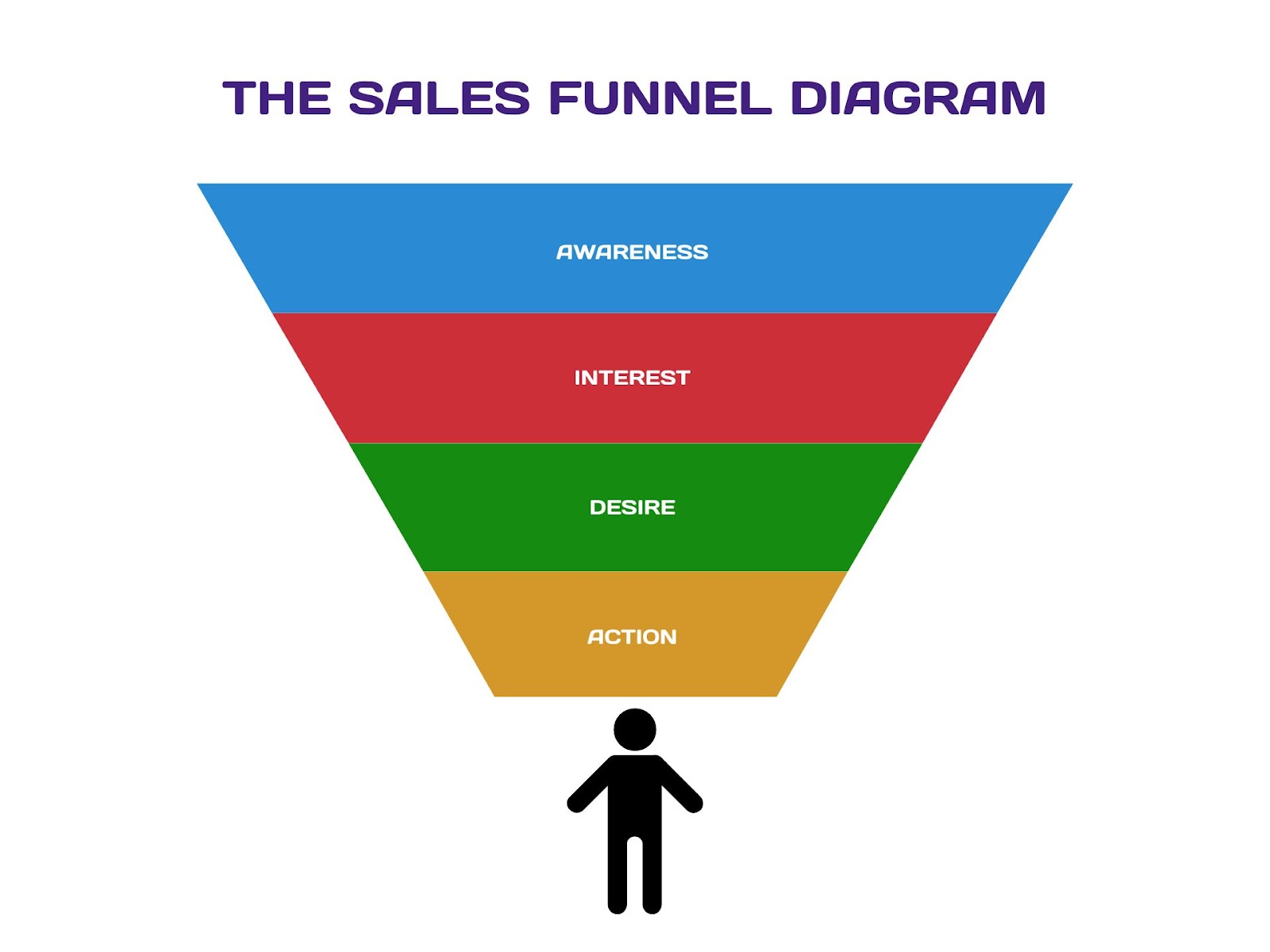
Now, after taking you through the stages of the sales funnel for better understanding, here is the step-by-step guide to creating your first sales funnel:
Before anything else, you must realize that every sales funnel starts with clarity. Who are you trying to reach? What problem do they need solved?
How to do this effectively:
By being specific, you should pick “productivity coaching for freelance designers” rather than just “productivity coach”. By doing this, you can craft a funnel that speaks directly to the people most likely to engage with your product.
A lead magnet is simply the bridge between attention and trust. It’s something free you offer in exchange for your audience’s email or contact information. It serves as the hook that helps to reel in your audience to your products and services. emphasizes that strong funnels always include a compelling opt-in incentive.
Examples:
Your lead magnet should be able to solve a small but real problem and tie directly into your paid offer. For instance, if you sell an online course on video editing with Capcut, your lead magnet could be a “Knowledge guide to using Capcut” e-book.
A landing page is a dedicated page that aims to convert visitors into clients or customers. It is also where people claim your lead magnet. According to AddPlugin, a strong landing page has three essentials:
Pro tip: Use a tool like Mainstack to easily design landing pages and integrate sign-up forms without feeling overwhelmed. They have assistants that can help you customize your pages with zero stress.
Once the visitor signs up with their email, the relationship begins. It is important to note that emails tend to convert far better than social media because they allow consistent, direct communication.
How to nurture effectively:
Doing this not only builds trust but also primes your audience to see you as the go-to solution.
Don’t overcomplicate your first sale. It is recommended that you start with a “mini offer”, something affordable, actionable, and quick to deliver. Examples include:
This builds momentum, generates revenue, and validates your idea before you invest in bigger products.
Even the best funnel won’t work if no one sees it. LYFE Marketing explains that a multi-channel approach works best:
Start with one or two channels, test, then scale what works.
Funnels aren’t “set it and forget it.” Yesware advises tracking conversion rates at each stage: landing page opt-ins, email open/click-throughs, and sales.
Tools you can use:
Your first funnel doesn’t end with the first sale. It is important to note that your most profitable customers are repeat customers.
Retention strategies:
By nurturing existing buyers, you reduce acquisition costs and turn your funnel into a growth engine.
Building your first sales funnel may feel overwhelming at first, but when you break it down into steps, it becomes manageable and incredibly rewarding. From defining your audience and creating a lead magnet to nurturing through email and offering simple products, each step builds momentum. And remember: funnels are not static, they’re living systems that grow and evolve as your business does. So don’t be afraid to switch things up as you evolve.
The key takeaway is this; don’t wait to perfect everything. As Funnel Teacher suggests, start small, test, and adjust. Each iteration will sharpen your process and improve results.
By focusing on value-driven communication, and optimizing your content regularly, you can create a funnel that not only generates revenue but also builds lasting relationships with your audience.
Remember, your first funnel is more than just a sales tool. It is the foundation for turning your work into a thriving business.

Today’s global economy offers African entrepreneurs, freelancers, and businesses a chance to earn in dollars, euros, and other major currencies by serving international clients. But getting paid isn’t always easy.
The rise of digital platforms, remote work, and e-commerce has made it possible for a Nigerian graphic designer, a Ghanaian consultant, a South African developer, or a Kenyan tutor to tap into international markets. However, one persistent hurdle stands in the way: getting paid. For many African professionals, creators, and business owners, accepting international payments remains a complex and costly process due to limited access to global payment platforms, high fees for currency conversions, restrictive banking regulations, and delays that disrupt cash flow.
This guide zeroes in on four key African markets; Nigeria, Ghana, South Africa, and Kenya, exploring the specific obstacles they face in 2025 and offering practical, country-tailored solutions to help businesses and individuals earn easily in dollars. With Africa’s digital economy projected to contribute $180 billion to GDP before the last quarter of 2025, the demand for effective payment solutions has never been higher.
Let’s break down the latest challenges and how to overcome them.
Nigeria’s fintech scene is flourishing like never before. Transaction values in digital payments are expected to hit $137.20 billion in 2025, yet earning in dollars remains a struggle for many entrepreneurs and freelancers. The country’s massive population and creative talent pool make it a hotspot for global opportunities, but payment barriers hold it back.
Latest Challenges Nigerian Businesses Face in 2025:
Solutions for Nigerians to Receive International Payments:
For a Nigerian content creator selling digital courses to U.S. clients, this means no more begging friends abroad for account favors, just direct dollar earnings with fast, affordable withdrawals.
Ghana’s digital economy is thriving, with mobile money transactions hitting 82% of GDP in recent years. Yet, for all its progress, earning in dollars from international clients remains elusive for many Ghanaians.
Latest Challenges Ghanaian Businesses Face in 2025:
Solutions for Ghanaians to Receive International Payments:
A Ghanaian graphic designer can now invoice a Canadian client in USD, all without wrestling with bank bureaucracy.
South Africa boasts Africa’s largest e-payments market, projected at $5 billion before the end of 2025, but its businesses still face hurdles when earning dollars from abroad despite its advanced infrastructure.
Latest Challenges South African Businesses Face in 2025:
Solutions for South Africans to Receive International Payments:
A South African app developer can now charge a U.S. client in dollars, convert at a fair rate, and avoid the SARB’s red tape, all in a day’s work.
Kenya’s M-Pesa is a global mobile money icon, with 34 million users, but its local dominance doesn’t fully translate to earning dollars internationally.
Latest Challenges Kenyan Businesses Face in 2025:
Solutions for Kenyans to Receive International Payments:
A Kenyan online tutor can now earn dollars from U.S. students and get paid in M-Pesa instantly, dodging the old fee traps.
These challenges aren’t just inconveniences, they’re costing African entrepreneurs millions in lost revenue and wasted time.
Mainstack offers a unified solution tailored to these realities. It empowers businesses in Nigeria, Ghana, South Africa, and Kenya to accept international payments without jumping through hoops like foreign account setups or complex registrations.
With support for 135+ currencies, competitive exchange rates, and withdrawals to local banks or mobile wallets, it cuts costs and speeds up cash flow. Plus, its integration with tools for invoicing, storefronts, and bookings makes it a one-stop shop for global expansion.
Africa’s digital payments market is set to soar as Statista projects $611.20 billion by 2029, with remittances hitting $96 billion in 2023. Yet, without the right tools, businesses in Nigeria, Ghana, South Africa, and Kenya risk missing out. The AfCFTA is boosting intra-African trade by 52% by 2030, but global earnings are the next frontier. Platforms like Mainstack remove the old barriers, letting you control your financial future.
Sign up today for free and enjoy the benefits of earning internationally that cuts across borders, country restrictions, and high fees.